
Essential guide to concrete screws
Concrete screws secure medium-to-high load applications into concrete, solid brick, and stone surfaces. People often refer to them as concrete anchors, concrete bolts, or concrete screw anchors.
They deliver a strong, secure hold while enabling quick and efficient installation, even in tough substrates. You can also install them close to the edge of the concrete without causing deformation.
They are available in different styles for use in different applications.
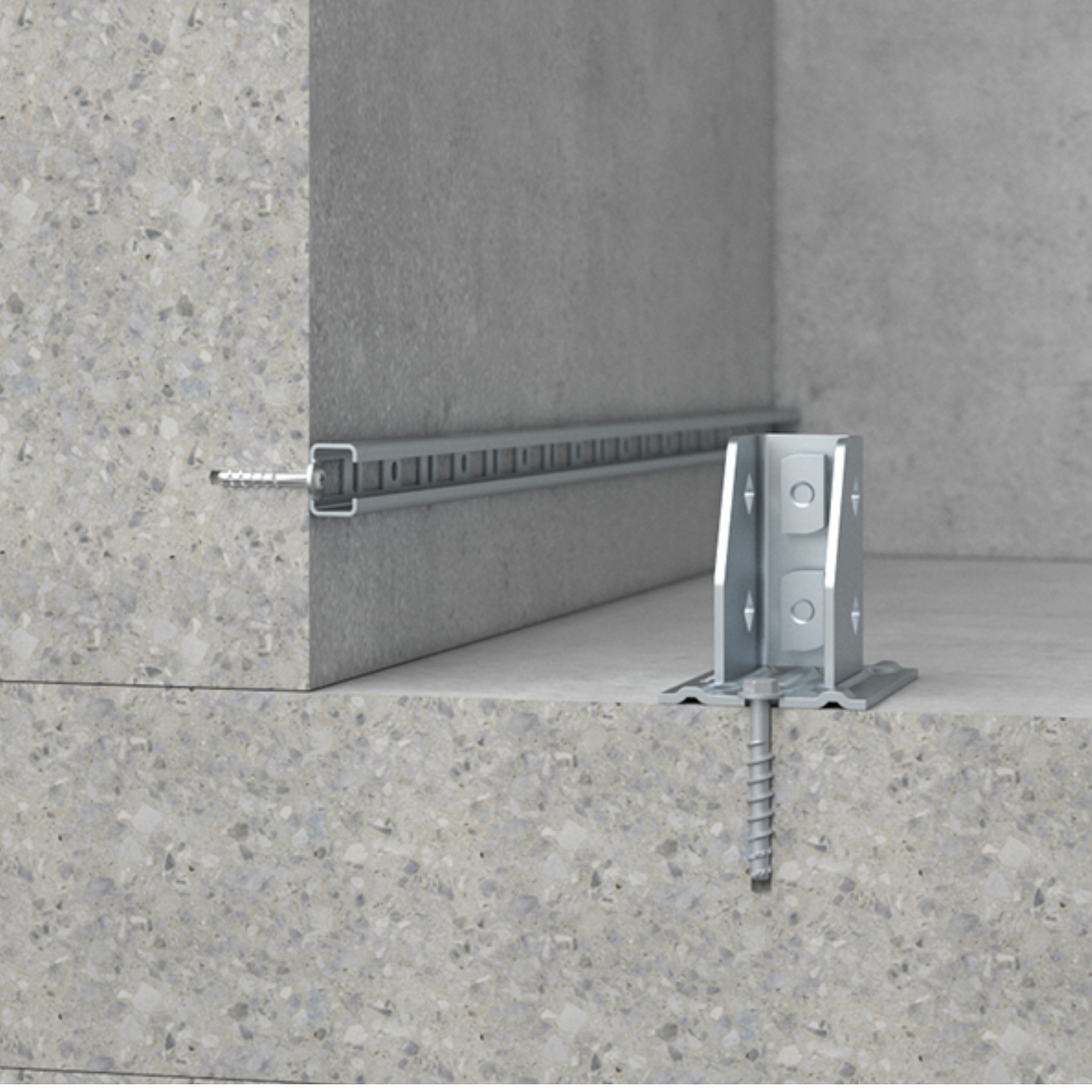
How do concrete screws work?
Concrete screws create a mechanical interlock with the base material to achieve a secure fixing. As installers drive the screw into a pre-drilled hole, the saw-tooth threads cut into the concrete and form a strong connection between the screw and the substrate. Once installed, installers can adjust the screw if required, provided they follow the installation instructions specified in the ETA.
When should you use concrete screw anchors?
Concrete bolts or anchors are suitable for all building services applications. For example, for fixing pipe support bracketry or installing fixings for plant and machinery.
Most concrete screw anchors are suitable for use in cracked and non-cracked concrete. In certain cases, they are suitable for dynamic loading such as seismic, fatigue and shock, making them very versatile. Many also have a fire rating, which gives added safety and versatility.
Cracked and non-cracked concrete – what is the difference?
A common question asked is how to choose the right anchor for a specific category of concrete. Concrete is commonly distinguished as either ‘cracked’ or ‘non-cracked’ concrete.
Non-cracked concrete – Areas of walls or columns that predominantly experience compressive stresses are generally considered non-cracked concrete. In these regions, cracks are unlikely to form at the anchor location during the anchor’s service life.
Cracked concrete – Concrete in zones subjected to tensile stress, such as tensile zones of slabs or other flexural members, is generally considered cracked. Cracks may develop over the service life of a structure, including in reinforced concrete, as concrete has relatively low tensile strength. Even relatively small cracks can have a significant effect on the load-bearing capacity and performance of an anchor. Therefore, when concrete is cracked or may crack during the anchor’s service life, use only anchors that have been tested and approved for cracked concrete applications.
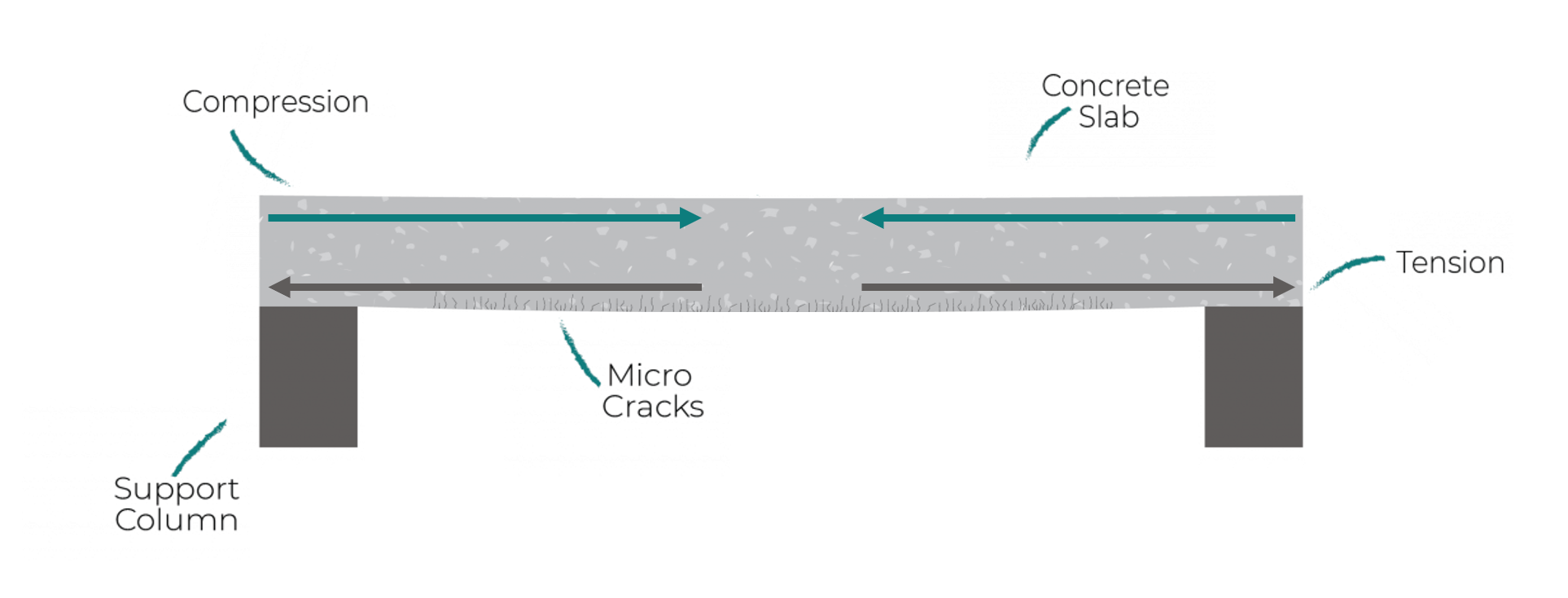
If you cannot confirm that the concrete at the anchorage location is crack-free and will remain crack-free throughout the anchor’s service life, assume that the concrete is cracked. This conservative approach helps ensure a safe and reliable anchor design.
Types of concrete screw
There are several types of concrete screw anchors, designed for use in different types of applications. Walraven offers the 3 main types shown below.
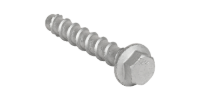
Hex Head (W-HLX-H)
A concrete screw with a hex head is a heavy-duty self-tapping screw with a pre-pressed washer. It can cut through concrete and stone. The hex head allows firmer tightening than some other options. For solid through-fixing of rails, wall plates and more.

Rod Hanger (W-HLX-N)
A concrete screw anchor suitable for hanging threaded rods from ceiling installations. With a female M8/M10 internal thread and a hexagon drive. For easy fixing of pipe routes, channel fixing, ventilation ducts and more. These self-tapping rod hangers offer a fast alternative to traditional drop-in anchors and are installed in less than half the time.
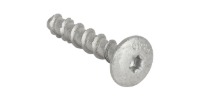
Pan Head (W-HLX-P/PX)
Pan head anchors are more versatile in application but commonly have lower strength than the hex head alternative due to the lack of head tightening. However, with the flatter head, you receive a flush fix against the surface of the attached material, ideal for fastening channel directly to the ceiling for the installation of pipes or ventilation ducts in concrete and hollow core slabs.
Where it is difficult or impossible to confirm that the concrete at the anchorage location is not cracked and will remain so throughout the service life of the anchor, the conservative approach is to assume that the concrete is cracked
Should I use an ETA approved anchor?
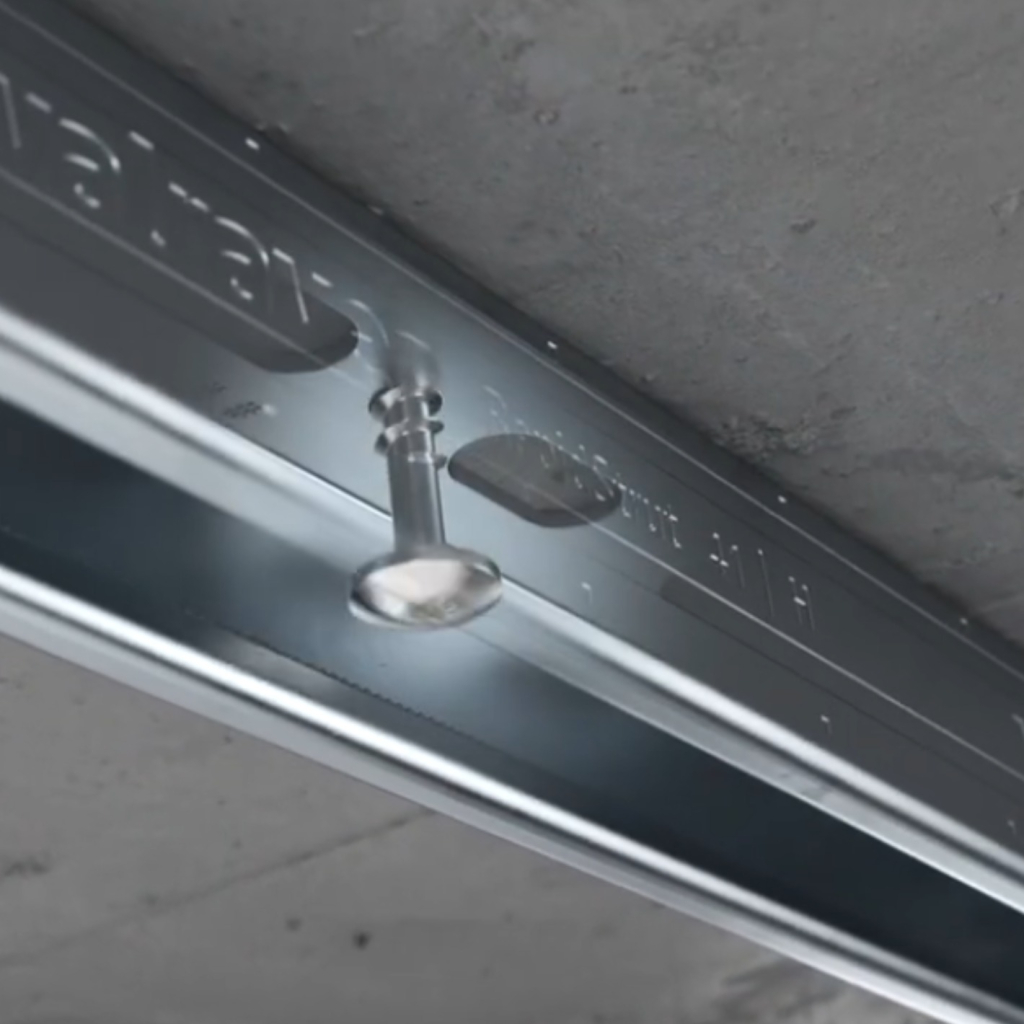
Anchors are often used in safety-critical applications. But what is a safety-critical application, and how important is it to use ETA approved anchors?
The European Technical Approval guidelines define safety-critical applications as being: “Applications in which the failure of an anchor could result in collapse or partial collapse of a structure, cause risk to human life, or lead to a significant economic loss”
Over the past decade or so, there have been several major installation failures resulting in serious injury and death. The most common reasons these occur are:
- Incorrect anchor selection
- Incorrect installation
- Specification changes
These failures have reinforced the need for a controlled and traceable approach to the specification, selection, design and installation of anchors, particularly in safety-critical applications. Under the European Construction Product Regulation (CPR), this approach is based on established assessment and design procedures. Where applicable, anchors should preferably be selected from products covered by a valid European Technical Assessment (ETA), based on the relevant European Assessment Document (EAD). Structural design should follow the applicable European provisions, including EN 1992-4 for anchorages in concrete, where applicable, and installation should strictly follow the manufacturer’s ETA and installation instructions. In the United Kingdom, a comparable approach is addressed by the British Standard BS 8539:2012+A1:2021, with significant industry input from the Construction Fixings Association (CFA).
Guide to selecting and installing concrete screws
Choosing the correct concrete screw anchor for your project is really important for a number of reasons. Concrete is a tough material that requires the correct drill and anchor to ensure a good bond.
Selecting the right, high-quality concrete anchor will offer project efficiencies and ensure you avoid issues during or post-installation, such as damage or replacement screws, which can arise from using the wrong or poor-quality product.
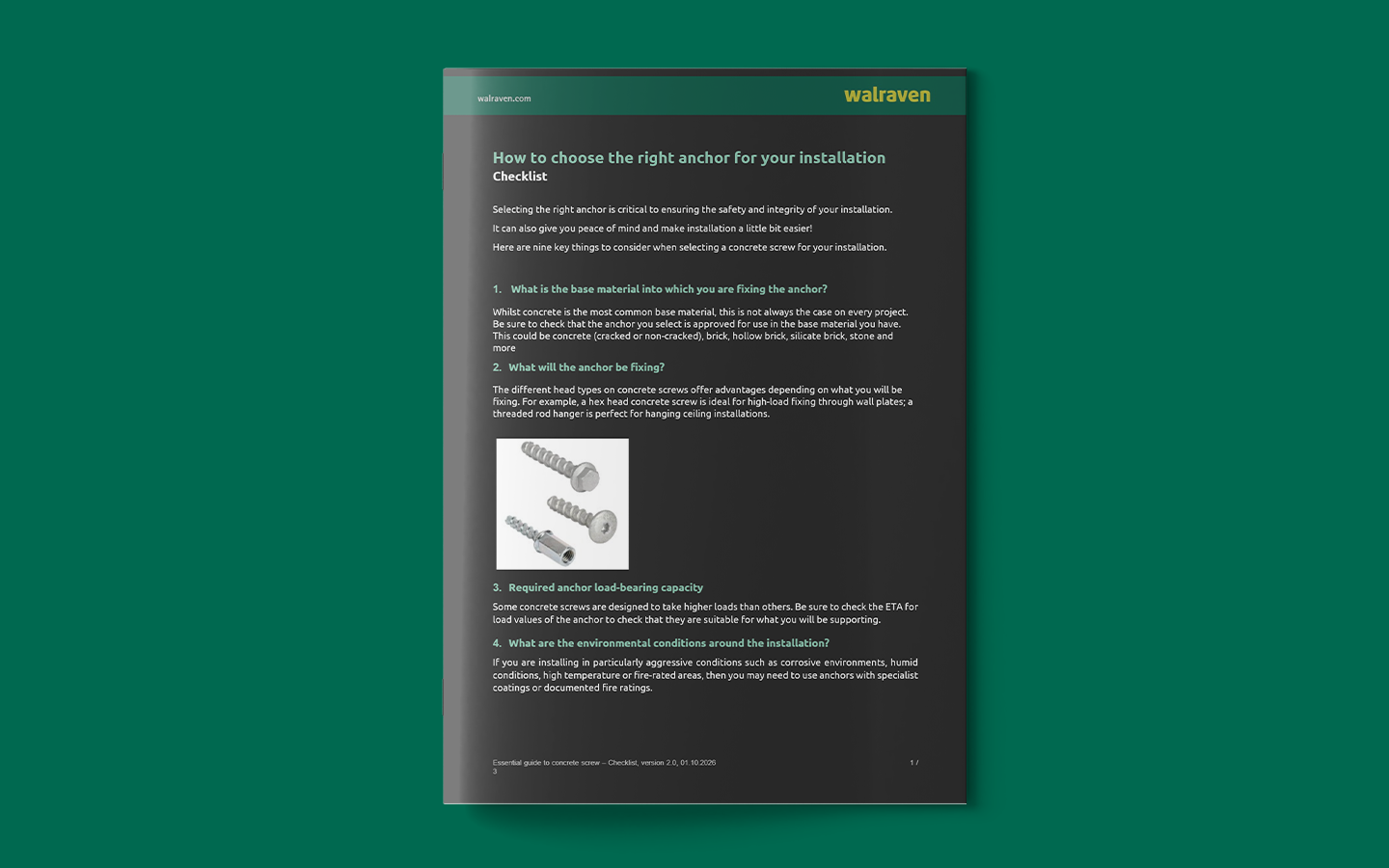
Concrete screw checklist
But which is the best anchor to choose, and what should you consider when choosing a concrete screw for your project? This guide will help you choose the right concrete screw anchor for your needs.
How to install concrete screw anchors
As mentioned in the previous section, incorrect installation of anchors, including concrete screw anchors, is one of the main causes of installation failure, which can lead to serious problems and even loss of life. Therefore, it is imperative that manufacturer installation guidelines are followed when installing concrete screws.
Top tips for installing concrete screws
1. Anchors always require a drilled hole. Even though concrete screws have threads, for safe installation, they should always be screwed into a drilled hole.
2. Do not anchor into a bad hole. The drill hole should be created according to the specifications in the ETA. For example, it must be:
- perpendicular to the surface
- the correct diameter and depth
- avoiding any reinforcement
- spaced correctly
3. Ensure the hole is dust-free. If drill dust remains in the hole when you install the concrete screw, you risk being unable to insert the anchor fully into the hole and subsequently causing it to break. For some brands of concrete screw, you should use a special pump to clean the hole. With Walraven’s HLX range of concrete screws, hole cleaning isn’t always necessary. If you use a dust-free drill bit, simply give the drill 3 quick in-and-out actions – no pump required. Always check the ETA for the brand of screw you are using for clear instructions on hole cleaning requirements.
4. Use tools with an appropriate amount of torque and do not overtighten the screws. The ETA will give you specific torque values to guarantee the performance of the screw anchor. If you overtighten the screw or use a tool which is too powerful, you risk breaking the concrete screw.
5. Always take time to plan the installation. Take time to read the ETA installation instructions and brief your team to ensure the concrete bolts or anchors are installed safely and according to the guidelines.
What is Walraven’s concrete anchor product offering?
Walraven’s concrete anchor range includes concrete screws, throughbolts, drop-in anchors, chemical anchors and more. Alongside our product range, we offer technical support and advice to help you at every step of the way if you need it.
In summary, Walraven offers:
- A range of high-load, high-performance mechanical and chemical anchors
- ETA approved range offering peace of mind and compliance with BS 8539:2012+A1:2021
- Fire-rated options
- Seismic options
- Documented installation guidance
- Technical advice available over the phone at any time
- Free anchor design software download to help you carry out anchor calculations specific to your installation and select the right anchor for your needs