

Vibration isolation for the Academy of Music in Bydgoszcz
Walraven has been involved in the new Academy of Music campus in Bydgoszcz, Poland, since the design phase began in…
As more building occupants are disturbed by mechanical vibration and vibration-induced noise from mechanical equipment, the HVAC sector has become more attentive to the acoustic design of such equipment and installations. But before we investigate and share examples of how vibration can be prevented, let’s take a look at the definition and the side effects of vibration.

In simple terms, it is a mechanical phenomenon in which oscillations occur about an equilibrium point. In some cases, this can be desirable, such as in the case of a guitar string’s motion, but oftentimes, they are undesirable as they create unwanted noise and discomfort. Typical examples of unwanted vibration include the mechanical motion of engines, electric motors, or other mechanical devices or equipment in operation.
In the HVAC context, sounds are mostly generated by mechanical motion from equipment. Nevertheless, some types of vibration can also generate sound effects that humans do not detect. But it’s important to know that undetected sound effects can also affect the health and well-being of building users. Therefore, the best way to reduce both detectable and non-detectable sound is to limit the movement produced by mechanical equipment in the first place.
HVAC equipment rigidly attached to a slab, wall, or ceiling can transmit oscillation to the supporting structure and cause highly undesirable levels of structure-borne noise. This noise can travel far and can even spread throughout the building. Just like equipment, piping, conduits, and ductwork can act as transmitters of structure-borne noise when rigidly connected to vibrating equipment.
Next to the unwanted noise, regular and recurring vibration can cause other problems that can affect the equipment, the building, and its users. These issues include, for example:
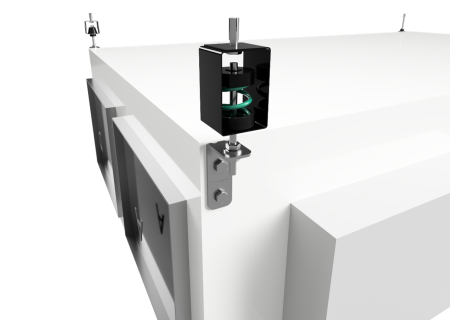
Isolating the sources of mechanical motion from their supporting structure using resilient devices, such as isolators, is the most efficient approach to eliminating vibration. Carefully selected vibroacoustic isolators and an anti-vibration system should, where possible, be placed directly between the mounting structure and the equipment. The isolators can then effectively absorb up to 99% of the excess movement produced by the equipment.
In the Walraven portfolio, you can find a complete range of rubber and metal vibroacoustic isolators, antivibration pads, mounts and springs to eliminate vibration problems in HVAC installations. The isolators can also be easily integrated with other typical pipe fixings, channel support or rooftop installations.
Walraven has been involved in the new Academy of Music campus in Bydgoszcz, Poland, since the design phase began in…

Walraven developed a tailored vibration isolation solution for a 14-ton ammonia compressor on behalf of a specialist contractor delivering installation…

How to evaluate the suitability of an isolator? How to read the tables? Example: the load per one vibro-isolator is…

How to evaluate the suitability of an isolator? How to read the tables? Example: the load per one vibro-isolator is…

How to evaluate the suitability of an isolator? How to read the tables? Example: the load per one vibro-isolator is…

Equipment specifications Check the type of equipment to isolate, along with its dimensions, structural attachment points, and location within the…

How to evaluate the suitability of an isolator? How to read the tables? Example: the load per one vibro-isolator is…

How to evaluate the suitability of an isolator? How to read the tables? Example: the load per one vibro-isolator is…

How to evaluate the suitability of an isolator? How to read the tables? Example: the load per one vibro-isolator is…

How to evaluate the suitability of an isolator? How to read the tables? Example: the load per one vibro-isolator is…

How to evaluate the suitability of an isolator? How to read the tables? Example: the load per one vibro-isolator is…
How to evaluate the suitability of an isolator? How to read the tables? Example: the load per one vibro-isolator is…

How to evaluate the suitability of an isolator? How to read the tables? Example: the load per one vibro-isolator is…

How to evaluate the suitability of an isolator? How to read the tables? Example: the load per one vibro-isolator is…

What is it? In simple terms, it is a mechanical phenomenon in which oscillations occur about an equilibrium point. In…